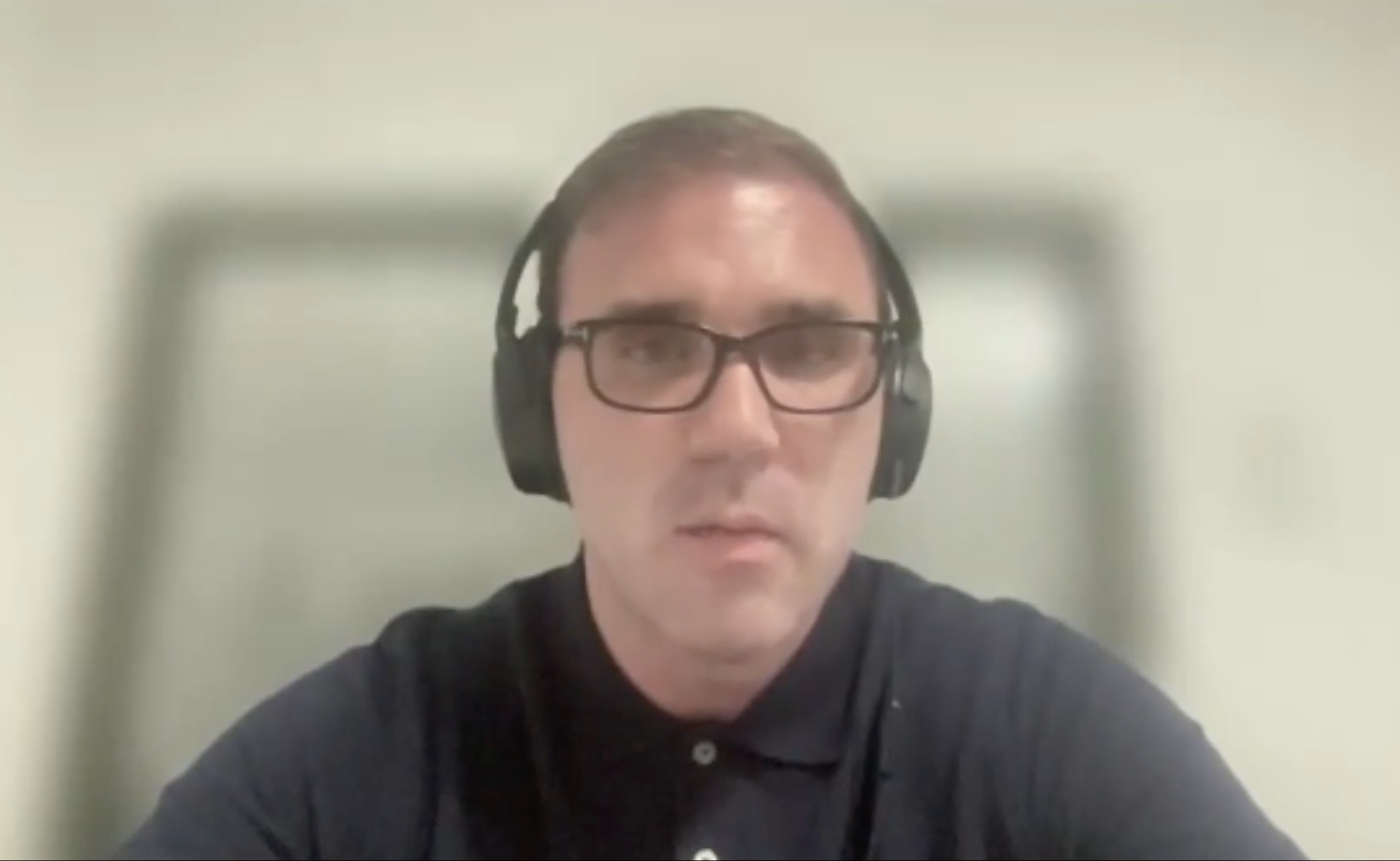
| I talked with Mark Sumner, founder of Geomorphic
|
| Earlier this summer, while attending Rick Rule’s Natural Resource Symposium, I got into a conversation with my friend Jeff Phillips and Mark Sumner, founder of a private company called Geomorphic and chairman and CEO of Daura Gold.
|
| The subject was artificial intelligence — but not in the vague, promotional sense in which that term gets thrown around so often these days.
|
| You see, Mark and his team have been applying AI directly to mineral exploration…and what they’re doing struck me as nothing short of transformational.
|
| Needless to say, I wanted to learn more. And rather than have that conversation privately, I decided to record it and bring you along for the ride.
What intrigued me most is that Geomorphic isn’t claiming AI can magically point to a spot on a map and tell you where the next 10-million-ounce gold deposit is hiding. In fact, Mark is refreshingly clear that it can’t.
Instead, the technology is attacking one of exploration’s biggest problems: too much data, scattered across too many places and too many decades, for any human team to efficiently digest.
Old drill logs, assay certificates, geological reports, geophysical surveys, handwritten records, historical interpretations — Geomorphic’s AI agents can ingest, organize and reason across enormous amounts of this material. The goal is to help geologists eliminate bad targets faster, identify relationships they might otherwise miss and focus their time and exploration dollars where they have the greatest potential payoff.
|
| And this isn’t theoretical. Geomorphic is already working with companies including Kincora Copper, Daura Gold, Noble Plains Uranium and Empress Royalty on everything from drill targeting and historical data recovery to due diligence and opportunity generation.
|
| Perhaps even more interestingly, Geomorphic is using its technology to generate its own mineral prospects. It has assembled roughly 15 projects across Finland and Sweden and is building a much larger pipeline, with the intention of joint venturing projects rather than funding expensive exploration programs itself.
One important disclosure: Geomorphic is a private company, and we have no investment or financial interest in it. This is not an investment recommendation. I simply think what Mark and his team are building is fascinating, potentially important for the exploration industry and well worth understanding.
I think you’ll enjoy our conversation. Click on the link below to watch it.
|
| Brien Lundin
Publisher, Gold Newsletter
CEO, the New Orleans Investment Conference
|
| CLICK HERE
To Watch My Talk With
Geomorphic Founder
Mark Sumner
|
| CONFERENCE COUNTDOWN: 63 DAYS TO NEW ORLEANS
Is The AI Boom Getting Too Big?
Nvidia reports earnings tonight, and just about everyone on Wall Street will be watching. But the real question isn’t whether Nvidia beats estimates. It's whether the extraordinary sums being poured into artificial intelligence can continue — and, eventually, whether all of that spending will earn an adequate return.
That’s a question Peter Boockvar was already raising from the stage at last year’s New Orleans Investment Conference. After walking us through the staggering capital expenditures being made by the big technology companies, Peter warned:
“They're hugely capital intensive and their cash flows are getting eaten up by all that capex and they're taking on now large amounts of debt to do it.”
And then he put today’s AI buildout into some historical perspective:
“We had the massive building in canals in Europe. We had the railroads. We had the fiber optic cables in the late 90s. This is a repeat.”
Peter wasn’t arguing that AI is a fad. Quite the opposite. He believes we’ll ultimately be tremendous beneficiaries of the technology. The question is what investors are willing to pay for that future — and how much money companies will burn getting us there.
Jim Bianco made essentially the same distinction during our Booms, Busts & Bubbles panel, arguing that AI could prove “more transformative than the technology of the internet” while reminding us that a revolutionary technology and a profitable investment aren’t necessarily the same thing.
While the New Orleans Investment Conference is best known for its focus on gold, silver, mining stocks and natural resources, nothing trades in a vacuum. That's why we spend so much time on the broader macro picture as well.
AI spending affects capital flows. Capital flows affect interest rates and liquidity. Interest rates affect the dollar. The dollar affects gold. Energy demand from data centers feeds directly into power markets, uranium, copper and the enormous buildout of physical infrastructure required to support it all.
In other words, even a story that looks like it belongs in Silicon Valley can ultimately have enormous implications for metals, mining and the investments we follow every day.
Part of the value of New Orleans is we bring together experts from across the investment world to connect those dots — from monetary policy and geopolitics to gold, silver, copper, uranium and the companies exploring for them.
And in 63 days, we’ll do it all over again. The 2026 New Orleans Investment Conference begins October 28 and it's not to late to sign up.
Click here to reserve your space and save $400 from our door price.
|
| CLICK HERE to watch interviews by Brien Lundin and Kai Hoffmann with many of today's most exciting junior mining companies on the
Gold Newsletter Youtube channel.
|


.png)